Sunday, January 27, 2008

MIKO 巫女[みこ

Miko [巫女[みこ]] are young female attendants who can be found at Shinto shrines performing ceremonies and other odd jobs such as staffing the shrine shop.
At the beginning of the year, selected girls from all over Japan got to become a Yuki Musume [幸娘] or "Fortune Girl" where they performed a spiritual cleansing ceremony at Keta Taisha shrine in the Ishikawa Prefecture.


"Miko" is translated into English as a "Shrine Maiden." Other terms such as prophet, medium, priestess, nun and even witch or sorceress is used - Wikipedia. Nun is probably the closest out of the bunch.

The last time I went to a shrine I didn't see any Miko and was rather disappointed ^^;
A place where you can be guaranteed to see Miko is at Meiji Jingu in Harajuku.


Back to the ceremony. The Miko line up and get ready for their chanting sessions.


The ceremony was covered by quite a few media. I can see this ceremony gathering more and more interest with otaku ^^;


The Miko then start to do their chanting.


After chanting, the Miko then jog off to the nearby beach. They then chant "Essa, Essa" as they jog - extremely kawaii. You can see some video footage of this ceremony here which was taken a few years ago.


The gods welcome the Miko by conjuring up huge gusts of wind.


The boat you was on sinks after hitting an endangered whale and you are bobbing up n down in the ocean.

You see a maid and a Miko calling to you for help who are also in the water. They both look sweet and gorgeous with big anime eyes.
But alas, you can only rescue either one and swim with her to the nearby deserted island. Who do you choose to rescue?


And this is where the ceremony took place - although I guess you are not interested any more after the Miko pics ^^;

Saturday, January 26, 2008

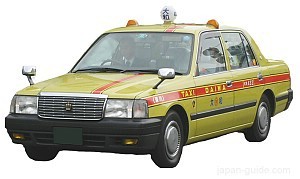
TAXI

Taxi
basic information

To the average cost conscious traveler, taxis are an expensive and little attractive alternative to the efficient public transportation system of Japan's largest cities, at least during daytime and evenings.

In smaller cities and the countryside, however, public transportation is often much less efficient, and taking a taxi from the nearest train station to your final destination, for example, can be a good choice. If you travel in a group of three or more people, a taxi can also be an economical alternative.

Most train and bus services in Japan stop around midnight, resulting in a sudden increase in the demand for taxis around that time - especially on weekends. On Friday and Saturday nights, long lines at taxi stands in front of major train stations are not uncommon, and waiting times can be long.

Most taxis accommodate up to four passengers (not including the driver), while larger vehicles are able to accommodate an additional fifth passenger.

Taxi fares typically start around 600-700 Yen for the first two kilometers and increase by roughly 100 Yen for every additional 500 meters traveled. The cost also increases when the taxi is not moving for a prolonged time. Late in the evening, rates are raised by 20-30 percent.

A plate on the dashboard in the lower corner of the wind shield indicates whether a taxi is vacant or not. A red plate indicates that the taxi is vacant, while a green plate indicates the opposite (see illustration below). During the night a light on the roof of a taxi can indicate that the taxi is vacant.


Vacant

Occupied

When you board a taxi, note that the vehicle's left rear door is opened and closed remotely by the driver. You are not supposed to open or close it by yourself. Furthermore, you are not supposed to tip taxi drivers, as the service is included in the price.

If you do not speak Japanese, or your destination is not a well known place, it is recommended to give your driver the precise address of your destination on a piece of paper or, even better, point it out on a map, since the Japanese address system can be confusing even to local taxi drivers.